



Joint Replacement Surgery has helped millions of people walk better, move freely, and live with less pain. Whether it is a Knee Replacement or Hip Replacement, these surgeries are usually very successful. But like every surgery, there can be some risks. One of the most serious complications is infection after joint replacement.
Even though infections are not very common, they should never be ignored. A small infection can become a major problem if treatment is delayed. The good news is that modern medical care, better surgical methods, and proper hygiene have made infections much easier to prevent and treat.
In this blog, let’s understand joint replacement infections in simple words, including their causes, symptoms, diagnosis, prevention, and revision treatment options.
What Is an Infection in Joint Replacement?
A joint replacement infection happens when bacteria or germs enter the area around the artificial joint implant. This infection may affect the skin, tissues, or the deeper area surrounding the implant.
The infection can happen:
- Within a few days after surgery
- Weeks or months later
- Even years after the joint
Although the chances are low, infections can affect the healing process and damage the surrounding bone and tissues if not treated on time.
Why Do Joint Replacement Infections Happen?
There are different reasons why infections may occur after surgery. Some infections happen during the operation, while others may spread through the bloodstream from another part of the body.
Common causes include:
- Poor wound healing
- Diabetes or weak immunity
- Obesity
- Smoking
- Poor hygiene
- Urinary tract or dental infections
- Bacteria entering during surgery
Sometimes, even a small untreated infection elsewhere in the body can travel through the blood and reach the artificial joint.
Common Symptoms of Joint Replacement Infection
The symptoms can vary from person to person. Some infections appear quickly, while others develop slowly over time.
Here are some common warning signs:
- Pain that keeps increasing
- Swelling around the joint
- Redness or warmth near the surgical area
- Redness or warmth near the surgical area
- Fever or chills
- Fluid or pus coming from the wound
- Difficulty walking or moving the joint
- Stiffness in the replaced joint
Many people think pain after surgery is normal. Yes, mild discomfort is expected during recovery, but severe pain, fever, or swelling should always be checked by a doctor.
How Doctors Diagnose the Infection
1. Physical Examination
The doctor first checks the wound, swelling, redness, and movement of the joint.
2. Blood Tests
Blood tests help detect signs of infection and inflammation inside the body.
3. Joint Fluid Test
A small amount of fluid is taken from the joint using a needle. This fluid is tested to identify the bacteria causing the infection.
4. Imaging Tests
X-rays, MRI scans, or CT scans may be used to check whether the implant or surrounding bone has been affected.
Doctors combine all these reports before deciding the best treatment plan.
Contact with Dr. (Prof.) Anil Arora for Joint Replacement
 1.png)
Dr. (Prof) Anil Arora
Chairman & Head of Department
Orthopaedics & Robotic Knee & Hip Replacement, Max Super Speciality Hospital and Institute of Joint Replacement, Patparganj, New Delhi 110092, India
Chairman & Chief Surgeon, Prof. Arora's Knee & Hip Surgery Clinics, NCR
Education & Training:
- DNB in Orthopaedics from National Board of Examinations
- MS in Orthopaedics from Dr. SN Medical College, Jodhpur
Hospital: Max Super Specialty Hospital
Clinic: Prof. Arora’s Knee & Hip Surgery Clinics, Delhi NCR
Experience: 30+ Years
- Commonwealth Academic Staff Fellowship in Primary, Complex & Revision Joint Replacement Surgery: Royal National Orthopaedic Hospital - Stanmore, London (UK)
- Professor at University College of Medical Sciences & GTB Hospital, New Delhi
- Assistant Professor at Dr SN Medical College & Mahatma Gandhi Hospital, Jodhpur
- Senior Resident at University College of Medical Sciences & GTB Hospital, New Delhi
Specialty: Orthopaedic Joint Replacement (Robotic Knee & Hip Replacement) Max Super Specialty Hospital
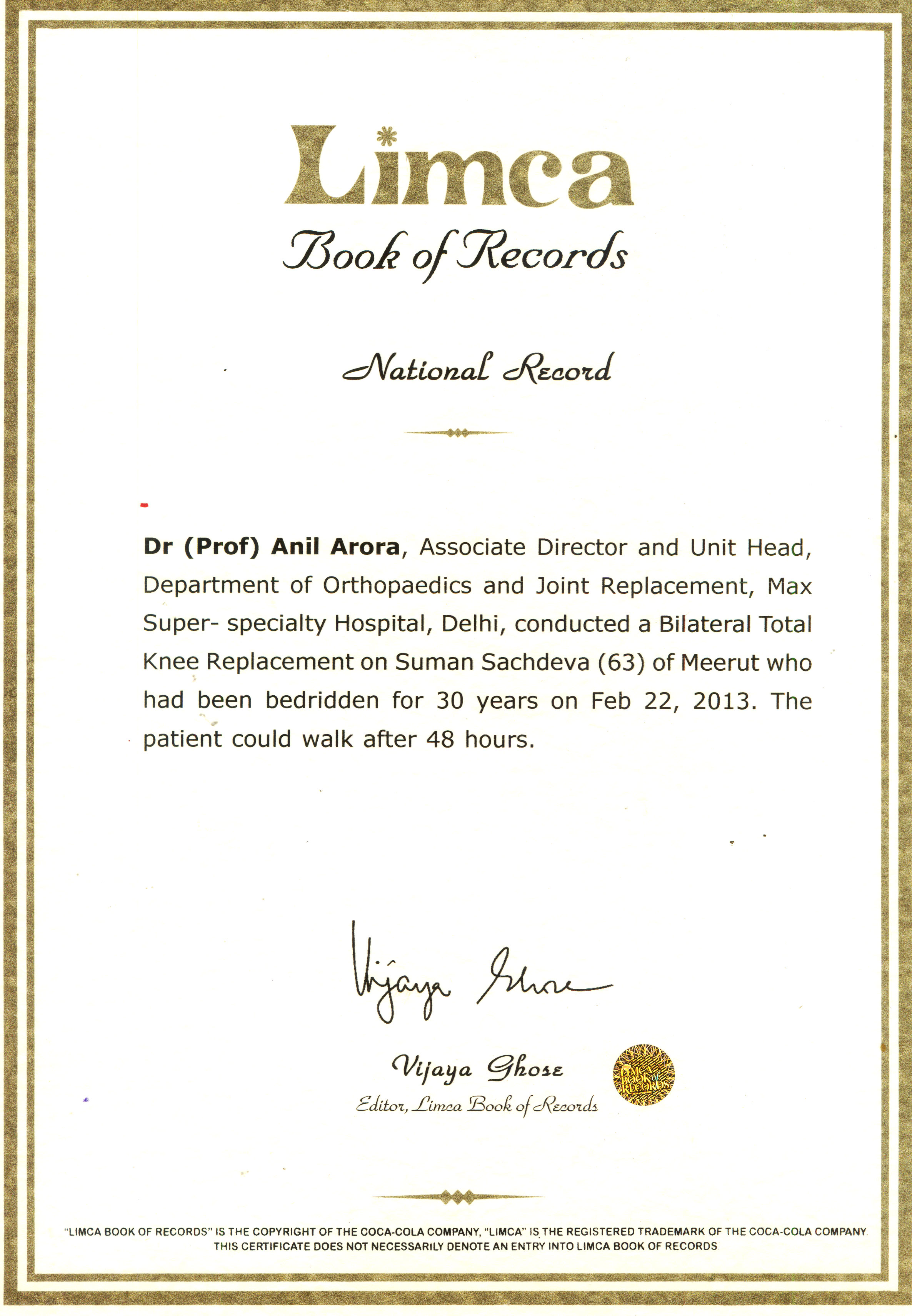
About: Dr. (Prof.) Anil Arora, Guinness world record holder and Limca book of records holder, is a Senior Robotic Total Knee & Hip Replacement surgeon. He is an Internationally known figure in Orthopedics and joint replacement. He has been performing joint replacements since 1988, experience of more than 30+ years and 15,000+ Knee & Hip Replacement surgeries. Teaching in medical college and training Orthopedic surgeons has provided him with vast surgical and clinical experience and expertise. He has wide-ranging skills in knee and hip replacement surgeries. He is known for his sound clinical judgment and fine surgical skills. He was the first surgeon to start pinless computer navigated total knee replacements in north India. He is regularly performing primary, complex and revision (Robotic & pinless computer navigated) knee and hip replacement surgeries. He is also performing primary and revision elbow and shoulder replacements. He is the immediate past president of Delhi Orthopedic association.
Prevention of Joint Replacement Infection
Prevention is always better than treatment. Hospitals and surgeons follow strict safety steps to reduce infection risk during joint replacement surgery.
Patients also play an important role in prevention.
Before Surgery
Doctors may recommend:
- Controlling diabetes and blood sugar levels
- Quit smoking
- Treating dental or urine infections
- Maintaining proper hygiene
- Losing excess weight if needed
During Surgery
Modern operation theaters use sterile equipment, clean air systems, and antibiotics to reduce bacterial exposure.
After Surgery
Patients should:
- Keep the wound clean and dry
- Take medicines exactly as prescribed
- Avoid touching the wound unnecessarily
- Attend regular follow-up appointments
- Inform the doctor immediately if symptoms appear
Simple precautions can make a huge difference in recovery.
Treatment Options for Joint Replacement Infection
The treatment depends on:
- How severe the infection is
- How early it is detected
- The condition of the implant
- The patient’s overall health
1. Antibiotics
If the infection is mild and detected early, antibiotics may help control the bacteria.
However, antibiotics alone may not always solve deep implant infections.
2. Cleaning the Joint (Debridement)
In some early infections, surgeons clean the infected tissue while keeping the implant in place. The damaged tissue is removed, and the joint is washed thoroughly.
This method works best when the infection is diagnosed quickly.
3. Revision Joint Replacement Surgery
If the infection becomes severe or long-lasting, revision surgery may be required.
Revision surgery means replacing the old infected implant with a new one.
What Is Revision Surgery?
Revision surgery is a second surgery performed to remove the infected artificial joint and treat the infection properly.
There are mainly two types of revision procedures:
One-Stage Revision
In this method:
- The infected implant is removed
- The area is cleaned
- A new implant is placed during the same surgery
This approach may reduce recovery time for selected patients.
Two-Stage Revision
This is the most common method for serious infections.
In the first surgery:
- The infected implant is removed
- The joint is cleaned
- Temporary antibiotic spacers are inserted
After several weeks of antibiotics and once the infection is cleared, a second surgery is done to place the new implant.
Although recovery may take longer, this method often provides excellent infection control.
Recovery After Revision Surgery
Recovery after revision surgery may take more time compared to the first joint replacement.
Patients usually need:
- Physiotherapy
- Regular checkups
- Antibiotics
- Healthy nutrition
- Proper wound care
Most people gradually return to normal activities with proper treatment and rehabilitation.
Patience is important because healing takes time.
Final Thoughts
Joint replacement infections can sound frightening, but they are treatable when detected early. Modern surgical techniques, proper hygiene, and timely medical care have greatly improved patient outcomes.
The key is not to ignore warning signs. Persistent pain, swelling, redness, or fever after joint replacement should always be discussed with a doctor.
With proper prevention, early diagnosis, and advanced revision strategies, many patients recover successfully and regain a comfortable, active life again.
A joint replacement is meant to improve quality of life — and with the right care, it usually does exactly that.