
Short answer:
In most cases, not comfortably or safely — especially in the first year. Standard knee replacements typically restore 110–115° of bend, while floor-sitting and Indian-style toilets need 130–150°. High-flexion implants exist, but research shows they don't reliably close this gap, and many patients report full satisfaction without ever fully regaining these positions.
This is one of the most common questions I hear at follow-up visits — often asked more anxiously than "when can I drive again?"
I remember a patient, a schoolteacher in her early 60s, who came in for her 6-week check-up and asked, almost apologetically, if she could sit on the floor for her granddaughter's birthday puja that weekend. I had to tell her something she didn't want to hear: not yet, and possibly not in the way she was used to, ever.
What surprised her more, a year later, was this — she was completely happy with her result anyway. Walking to the temple without pain mattered more to her than sitting on its floor ever did.
That's really the honest truth this article is built around.
What Does "Deep Flexion" Actually Mean?
"Flexion" simply means how far your knee bends, measured in degrees.
- Standing straight: 0°
- Sitting in a chair: about 90–100°
- Squatting or sitting cross-legged: 130–150°+
The activities woven into everyday Indian life — floor-sitting, squatting, Indian-style toilets — sit at the very top of this range. That's the core of the issue.
How Much Bend Do You Actually Get After Robotic Knee Replacement?
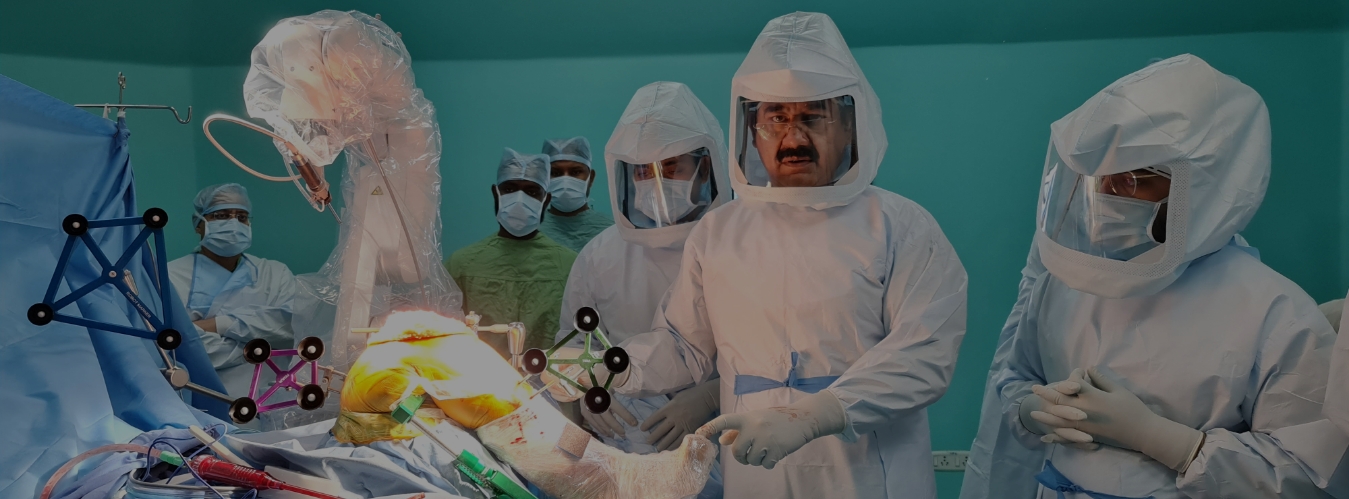
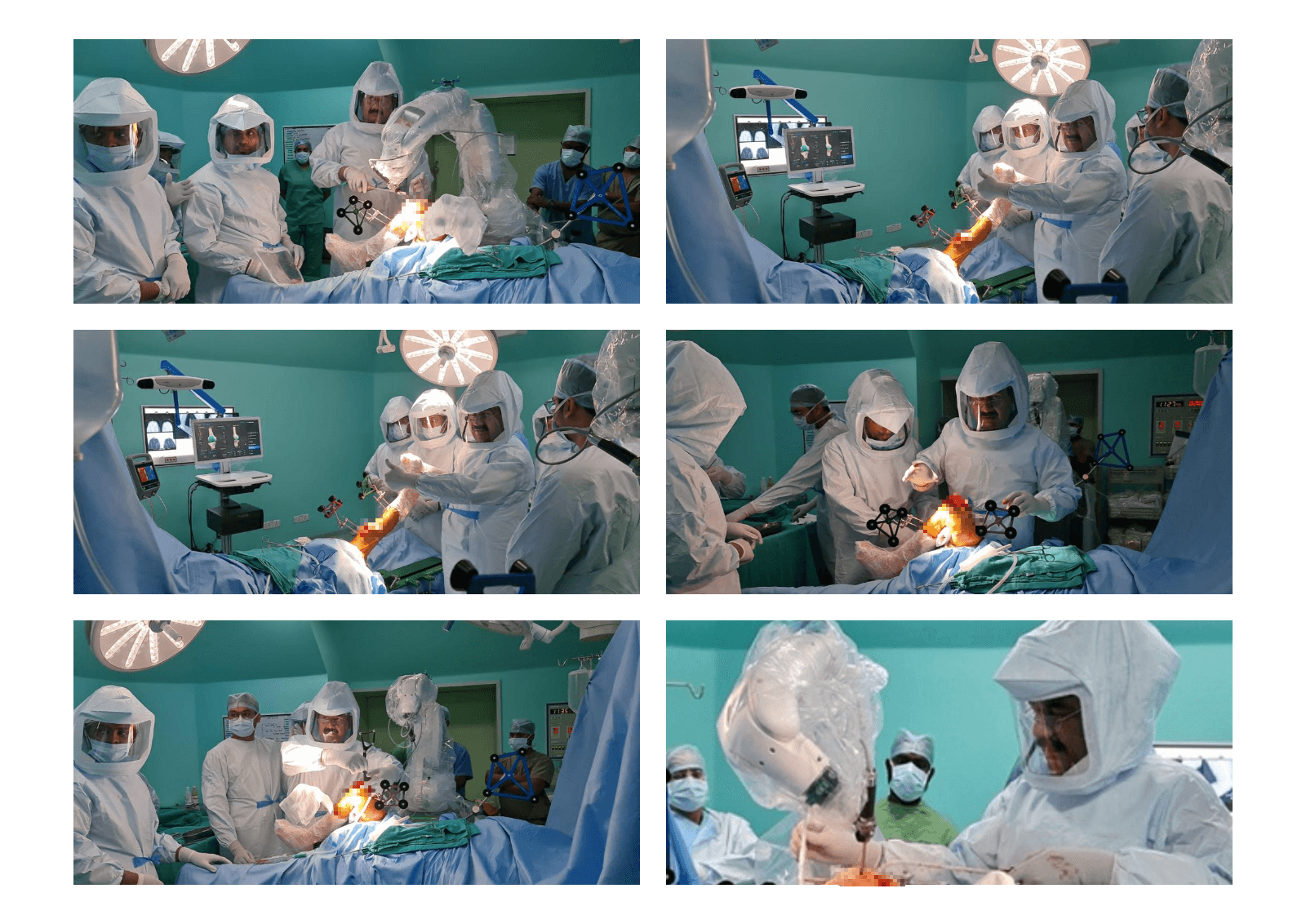
Robotic-assisted surgery improves precision, alignment, and how evenly your implant sits — but it doesn't fundamentally change human anatomy.
- Most knee replacements, robotic or traditional, achieve 110–115° of flexion
- This is genuinely enough for walking, stairs, chairs, and cars
- It typically falls short of what deep floor-based activities require
How Much Bend Do These Specific Activities Need?
| Activity | Flexion needed |
|---|---|
| Walking | ~60–70° |
| Climbing stairs | ~90–100° |
| Sitting in a chair | ~90–100° |
| Squatting | ~120–150° |
| Kneeling | ~125–140°+ |
| Sitting cross-legged on the floor | ~145–150°+ |
| Using an Indian-style toilet | ~130–150°+ |
Notice the gap. Most patients comfortably reach the top of the "daily life" list — and stop well short of the bottom.
Do You Actually Need to Squat to Be Happy With Your Surgery?
This is the part that surprises most people.
In research following Indian patients who could not squat or sit cross-legged after standard knee replacement, the large majority were still satisfied with their results.
Pain relief and walking ability — not floor-sitting — were what most strongly predicted happiness with the surgery.
Have a cardiac history? Let's plan your surgery safely.
Dr. Arora coordinates closely with your heart specialists to ensure your health and mobility goals align.
Practical Alternatives That Actually Work
"You don't have to choose between your knees and your daily life. Small changes make a real difference:
- Raised toilet seat or commode chair — widely available in India, often the single biggest comfort upgrade
- A Western-style toilet conversion attachment, if a full Indian-style toilet is your only option at home
- A stool or low chair instead of floor cushions for meals or gatherings
- A prayer chair or raised platform for puja — increasingly common, and not seen as unusual anymore
- Grab bars near the toilet, since balance, not just bending, is part of the safety concern
A Realistic Recovery Timeline
- First 6–12 weeks: Avoid deep flexion completely. Focus on regaining 90–110° for daily activities.
- 3–6 months: Flexion gains continue gradually with physiotherapy.
- After 1 year: Whatever range you've reached is generally your long-term range. Deliberately forcing further bend isn't usually recommended, even if it feels technically possible.
When Is This Genuinely Unsafe?
- Sharp pain during a deep bend is different from ordinary tightness — stop immediately if you feel it
- Getting up from a squat is often riskier than getting down, due to balance and leverage — this matters as much as flexion itself
- Using an Indian-style toilet without support combines deep flexion with fall risk, which is why alternatives are recommended even for patients with good flexion
The Bottom Line
Most patients recover a full, comfortable, pain-free daily life after robotic knee replacement — but for many, that life doesn't include full floor-sitting, squatting, or Indian-style toilets, at least not the way it did before.
That's not a failure of the surgery. It's simply how biomechanics work, for every patient, everywhere in the world.
Prof. Arora discusses realistic expectations for flexion and daily activities with every patient before surgery, so there are no surprises afterward — only honest planning.
Curious what range of motion is realistic for your specific case? Book a consultation with Prof. Arora to discuss your recovery goals honestly, before surgery.
Curious what range of motion is realistic for your specific case?
Book a consultation with Prof. Arora to discuss your recovery goals honestly, before surgery.


.png)